Wrick Talukdar
|
Distinguished technology leader with over two decades of experience driving technological transformations in global enterprises. Renowned for expertise in AI, Machine Learning, Generative AI, and Cloud Computing, consistently leveraging cutting-edge technologies to deliver strategic business value.

About
Empowering the future through AI innovation and scientific research
Wrick is a distinguished AI/ML architect and product leader with over two decades of experience driving technological transformations in global enterprises. He has led digital initiatives that drive significant cost savings and accelerate time-to-market, with a proven track record of building high-performance teams that deliver innovative AI products and solutions.
As a strategic thinker, Wrick excels in aligning technology with business goals, fostering cross-functional collaboration, and addressing complex challenges with data-driven approaches. He is a TOGAF® Level 2 Certified Professional, holding multiple AWS and Azure certifications in AI and Machine Learning.
Beyond his professional achievements, Wrick has made a lasting impact on the global scientific community, with his research widely referenced and cited worldwide. He serves as Chair of IEEE NIC, is a Senior Member of IEEE, and holds the role of Chief AI/ML Architect for Generative AI Initiatives within the IEEE Industry Engagement Committee (IEC).
"From curiosity to real-world impact — Wrick Talukdar is shaping the future of AI. Currently serving as Technology Leader at AWS, he is widely credited for pioneering scalable, enterprise-grade award-winning AI products."
"A distinguished AI/ML architect and product leader with over two decades of experience. An innovator and thought leader, spearheading large-scale technological transformations across global enterprises."
Professional Timeline
Career highlights and leadership roles in AI/ML innovation
Amazon Web Services (AWS)
Technology Leader — Generative AI / Product
Leading generative AI initiatives, driving technology strategy and fostering innovation globally. Overseeing strategic partnerships and enterprise AI implementations.
Product Leadership, Research & Architecture
ConsultingStrategic consulting on cloud products, AI/ML adoption, and technology architecture for enterprise organizations.
Alberta Health Services
Domain Architecture Leader & Researcher
Shaping technology standards and frameworks for provincial healthcare modernization. Architect for Alberta's One Patient One Record initiative.
CGI
Enterprise Architect Leader
Leading digital transformation across North America, Caribbean, and Mexico for Oil & Gas through Cloud and AI/ML solutions.
IBM
Management Consultant / Product Research
Built high-performance teams and delivered innovative products, focusing on cloud computing, machine learning, and enterprise-scale technology solutions.
PwC Global
Software Engineering
Specialized in aligning technology with business goals, fostering cross-functional collaboration, and addressing complex enterprise challenges.
Speaking Engagements & Conferences
Thought leadership and knowledge sharing across global platforms
2025
IEEE Future Networks World Forum, Bangalore India
"The Foundational Agentic Architecture for Enterprise Autonomy"
Exploring the Agentic AI Mesh and how it is transforming organizations globally.
IEEE Conference on Consumer Electronics (ICCE), Berlin Germany
"Building Agentic AI Systems for Consumer Technology"
Exploring the future of autonomous AI agents in consumer applications and their impact on industry standards.
Technology Summit, Berlin Germany
"Generative AI in Enterprise: Challenges and Opportunities"
Addressing security, ethics, and scalability in enterprise AI implementations.
IEEE-Eta Kappa Nu HKN, Singapore
"Career Development through AI Technologies"
Empowering young professionals with practical AI solutions for strategic career guidance..
Industry Forum on LLMs in Consumer Technology, Las Vegas US
"Large Language Models in Consumer Technologies"
As LLM advance in rapid pace, they bring unprecedented opportunities and challenges.
Agentic Processing, San Jose US
"GenAI-Powered Autonomous Agentic Systems"
Demonstrating practical applications of autonomous systems for multimodal content processing.
2024
IEEE Industry Engagement Workshop, Virtual
"Career Development through AI Technologies"
Empowering young professionals with practical AI skills and strategic career guidance.
Global Technology Leadership Forum, Virtual
"Digital Transformation through AI: Strategic Business Value"
Case studies and frameworks for successful AI adoption in global enterprises.
2023
Multimodal content processing, Las Vegas US
"GenAI-Powered Multimodal Systems"
Demonstrating practical applications of Generative AI in multimodal content processing.
Cloud Computing & AI Symposium, Canada
"Scalable AI Architectures on Cloud Platforms"
Best practices for deploying enterprise-grade AI solutions using Cloud.
ADIPEC, Abu Dhabi
"Energy Transformation through AI/ML and IoT"
Transform energy industry with artificial intelligence and connected devices.
ADIPEC, Abu Dhabi
"Digital Twin"
Envision a safe and secure offsite with digital twin technology.
2022
Energy Station of the Future, Houston US
"AI Powered Futuristing Gas Station"
Innovate gas stations with AI/ML and IoT.
AI Seminar, Canada
"Implement efficient AI Architectures at scale"
Design enterprise-grade AI solutions at scale.
What I'm Working On Now
August 2026Let's Shape What's Next
Whether it's AI strategy for your enterprise, a research collaboration, a keynote, or a bold idea worth exploring — I'm always open to conversations that push boundaries.
Research
Advancing AI and machine learning through scientific research
Research Impact
Meta-Reasoning in Autonomous Agents
This study examines how meta-reasoning affects the performance of LLM-based autonomous agents across GAIA and AgentBench. It aims to provide empirical evidence on whether self-monitoring and regulation improve adaptability and trustworthiness in different settings.
Synthetic Data Generation for Clinical Documentation
Accurate and comprehensive clinical documentation is crucial for delivering high-quality healthcare. Through extensive experiments on a large dataset of anonymized clinical transcripts, we demonstrate the effectiveness of our approach in generating high-quality synthetic transcripts.
Cost-Effective Multi-Modal Financial Document Classification
Traditional text-based approaches often fail to capture the complex multi-modal nature of financial documents. We propose FinEmbedDiff, a cost-effective vector sampling method that leverages pre-trained multi-modal embedding models to classify financial documents with high accuracy.
Synergizing Unsupervised and Supervised Learning
While supervised learning models have shown remarkable performance in various NLP tasks, their success heavily relies on large-scale labeled datasets. This paper presents a novel hybrid approach that synergizes unsupervised and supervised learning for improved NLP task modeling.
LLMs for Healthcare Documentation
Comprehensive clinical documentation is crucial for effective healthcare delivery, yet it poses a significant burden on healthcare professionals. We demonstrate the application of NLP and ASR technologies to transcribe patient-clinician interactions, coupled with advanced prompting techniques using LLMs.
Document Skew Impact on Multi-Modal LLMs
Multi-modal LLMs have shown remarkable performance in data extraction from documents. However, the accuracy can be significantly affected by document in-plane rotation (skew). This study investigates the impact on Claude V3 Sonnet, GPT-4-Turbo, and Llava:v1.6.
Context-Aware Grounding for LLM Fidelity
As LLMs become increasingly sophisticated, ensuring their robustness, trustworthiness, and alignment with human values has become critical. This paper presents a novel framework for contextual grounding in textual models, with emphasis on Context Representation stage.
Trust, Safety, and Ethics in LLM Development
The rise of LLMs in 2023 has revolutionized AI applications, but their potential for information leakage, misinformation, and misuse raises significant safety and ethical concerns. This study proposes a Flexible Adaptive Sequencing mechanism with trust and safety modules.
Gas Station of the Future: AI/ML and IoT Integration
Gas stations are evolving from basic fuel dispensing centers into sophisticated retail hubs through AI, ML, and IoT technologies. This transformation includes predictive analytics, dynamic pricing, personalized customer experiences, and automation systems.
Publications & Research
LiteLLM as a Control Plane
AI Agentic Mesh
Meta Reasoning in Agentic Systems
Reinforcement Learning in Agentic Systems
Autonomous AI Agents for Decision Making
LLMs Impact on Consumer Technologies
Harnessing Generative AI for Patient-Centric Clinical Notes
Clinical documentation is drowning in paper. Physicians spend an estimated 2-3 hours per shift on documentation, creating narrative notes that remain locked in electronic health records behind HIPAA walls. This documentation burden not only exhausts clinicians; it represents an untapped goldmine of training data for AI systems that could improve diagnosis, streamline triage, and advance medical knowledge.
The tension is acute: patient data is invaluable for machine learning, but it's also irreplaceable. A real clinical note cannot be unshared. HIPAA de-identification removes obvious identifiers but leaves statistical fingerprints that can be re-identified. The result: most AI teams working on clinical problems operate on tiny, carefully curated datasets that constrain model capability and generalization.
Over the past 18 months, I've led research on synthetic clinical data generation using large language models—work recently published as arXiv:2406.06569 in the International Journal of Innovative Science and Research Technology. This article distills that research and provides a practical framework for generating synthetic clinical documentation that is provably privacy-preserving, statistically faithful, and immediately usable for training downstream models.
Clinical notes are narrative prose: chief complaints, history of present illness, physical exam findings, assessment, and plan. Unlike structured EHR data (labs, vitals, prescriptions), these narratives contain the clinician's reasoning, uncertainty, and contextual judgment. They're also highly sensitive: a single note can reveal diagnoses, medications, mental health history, and social circumstances that patients would never want exposed.
Agentic Systems for Competitive Intelligence
Transform Insurance Risk Assessment with Agents
Elevate Healthcare Documentation with Generative AI
Transform Global Speech into Local Language
How Agentic Systems Can Save Lives in Medical Emergencies
Rise of Agentic AI Across Industries
Security in Agentic Systems
Books
Comprehensive guides on AI, machine learning, and emerging technologies
"More than a technical reference, this book serves as an essential guide for shaping the future of Generative AI and intelligent agents. I wholeheartedly endorse this timely and insightful work."
"As somebody that has been working on artificial intelligence for decades, I believe this book will be a great resource for students, researchers, and professionals alike, charting a clear path forward."
"This isn't a 'just prompt it' playbook — it's a signal that agentic systems are moving from novelty to necessity. Multi-agent systems aren't theoretical anymore, they're the scaffolding for how real enterprise autonomy will scale."
Published Globally
Translated and published by leading international publishers · Polski, Português, Српски editions coming soon

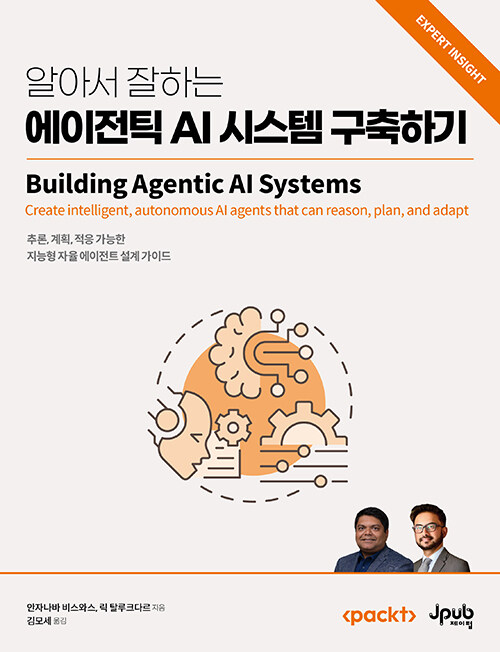
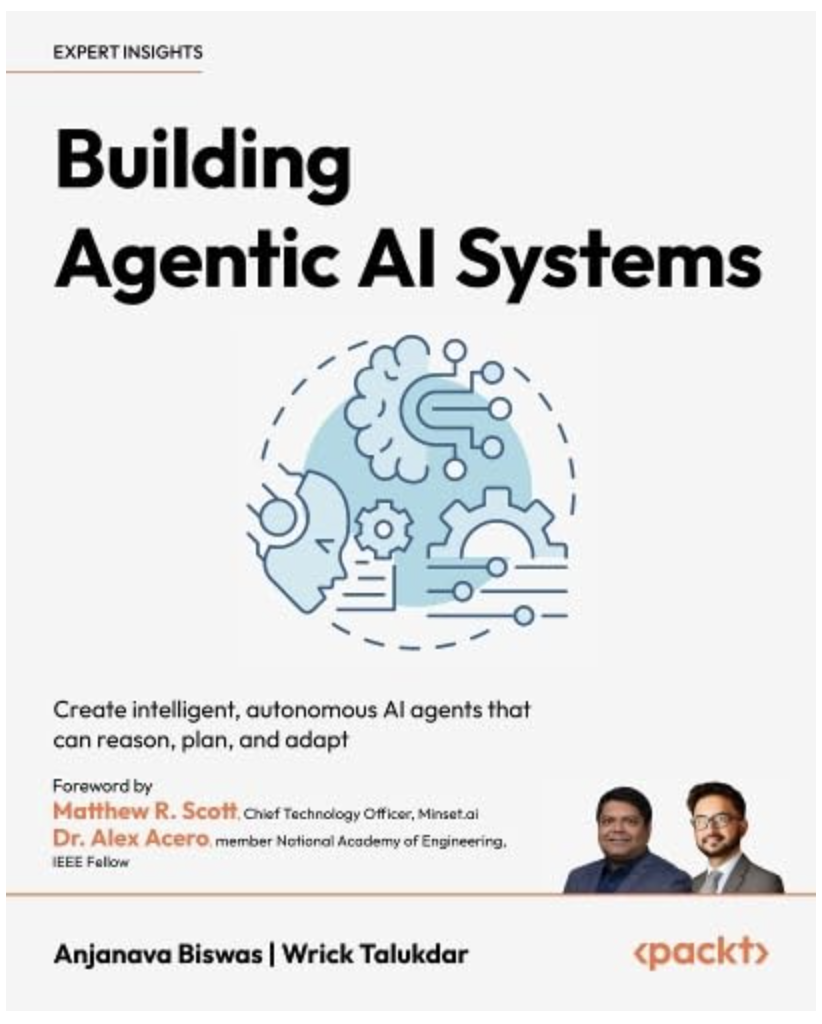
Building Agentic AI Systems
Create intelligent, autonomous AI agents that can reason, plan, and adapt to real-world challenges. A comprehensive guide to building next-generation AI systems.
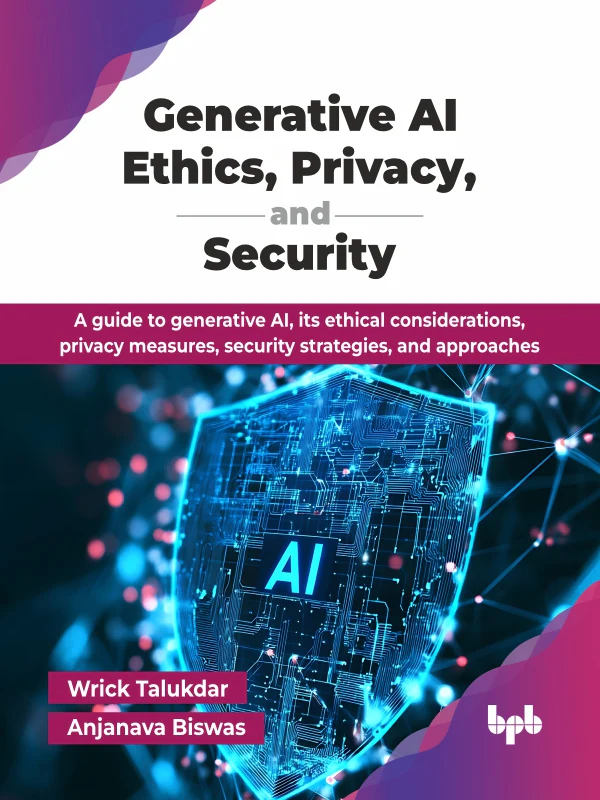
Generative AI Ethics, Privacy, and Security
A comprehensive guide to generative AI, its ethical considerations, privacy measures, security strategies, and responsible AI development approaches.
Coming Soon
Building Agentic AI Systems Vol II
A deep exploration of the key agentic enterprise architectures in generative AI that are frequently used. Expected release: November 2026.
Professional Memberships
Active participation in leading technology and research organizations
Articles & Insights
The Voice Was Never the Breakthrough
Speech-to-speech AI turned voice agents from scripted phone trees into real-time, tool-calling systems. But the hard problem has quietly shifted, from sounding human to staying trustworthy and contained when the user cannot see what the agent is doing.
The Model That Refuses to Talk
A new class of model stopped generating text and started scoring a fixed menu of answers instead. That one mechanical choice is what makes it cheap, fast, and honest about what it does not know. It is also what caps it.
The Identity Layer Nobody Built
Prompt injection is permanently the number one risk, and no filter will ever fix it. The real exposure is not whether a model gets fooled. It is what a fooled agent is allowed to reach.
Attention Didn't Die, It Just Got Outnumbered
Everyone keeps announcing the end of the Transformer. Yet every frontier model that claims to move past attention quietly keeps it. The real story of 2026 is not replacement. It is a truce.
Reasoning in the Dark: The Coming Trade Between Efficient Thought and Auditable Thought
The field is quietly moving reasoning off human-readable tokens and into latent space. It is faster and cheaper. It also throws away the only real window we have into how a model thinks.
Self-Evolving Multi-Agent Systems: When Agents Learn to Collaborate Without Human Design
What happens when you stop manually designing agent architectures and let the agents figure out how to work together? The Agentic Neural Network framework treats collaboration as backpropagation.
The Shrinking Model Revolution
Phi-4 at 3.8B parameters beats GPT-4o on MATH benchmarks. Small models cost 100x less. The "bigger is better" orthodoxy is breaking down.
AI as Scientist: When Machines Design Their Own Experiments
From hypothesis generation to autonomous lab execution, AI systems are beginning to do what only human researchers could do before. Robin, The AI Scientist, self-driving labs running 2.2M experiments per week...
Recursive Self Improvement: The Most Important Technology Debate of Our Time
AI systems are beginning to improve themselves. Anthropic reports 80% of their code is now written by Claude. Is society ready?
The Agent Harness: Why It Matters More Than Your Model
Beyond RAG and GraphRAG for Time-Sensitive Knowledge
RAG retrieves chunks. GraphRAG retrieves subgraphs. But neither handles temporal reasoning well. A new architecture combining episodic memory, knowled...
Navigating the Ethics of Generative AI in Healthcare
Meta-Reasoning in Autonomous Agents: Do Self-Monitoring LLMs Actually Perform Better?
Agentic Design Patterns for Production Systems
Synthetic Data Generation for Clinical Documentation: Bridging Privacy and Utility
Cost-Effective Multi-Modal Classification for Financial Documents
Synergizing Unsupervised and Supervised Learning: When Labels Are Scarce
How Document Skew Breaks Multi-Modal LLMs — and What to Do About It
Context-Aware Grounding: Keeping LLMs Faithful to the Source
Trust, Safety, and Ethics in LLM Development: A Practitioner's Framework
As LLMs grow more capable, the risks of information leakage, misinformation, and misalignment grow too. A practical fram...
LLMs for Healthcare Documentation: Automating the Clinical Burden
Clinical documentation consumes 35% of a physician's day. How LLMs are transforming note generation, coding, and summari...
The Gas Station of the Future: Where AI/ML Meets IoT at the Edge
Reimagining fuel retail with computer vision, predictive maintenance, and real-time IoT analytics — a case study in appl...
Edge AI: Deploying Deep Learning on Resource-Constrained Devices
Model pruning, quantization, knowledge distillation, and TinyML — the techniques that shrink billion-parameter models to...
Few-Shot Learning with Large Language Models: The GPT-3 Moment
When GPT-3 showed that prompting could replace fine-tuning for many tasks, it changed the economics and accessibility of...
MLOps: Bridging the Gap Between Notebooks and Production
87% of ML models never reach production. Feature stores, model registries, CI/CD for ML, and monitoring — the infrastruc...
Explainable AI: Opening the Black Box Before Regulators Do
SHAP, LIME, attention visualization — the practical toolkit for making ML decisions interpretable when stakeholders ask ...
Federated Learning: Training Models Without Sharing Data
How federated learning enables collaborative model training across hospitals, banks, and devices — without raw data ever...
GANs and the Dawn of Creative AI
From mode collapse to StyleGAN — how adversarial training unlocked image synthesis and laid the groundwork for today's d...
Reinforcement Learning Beyond Games: From AlphaGo to Real-World Control
AlphaGo captured headlines, but the real story is RL's migration to robotics, supply chain, and recommendation systems —...
Transfer Learning Comes to NLP: From Word2Vec to BERT
The journey from static word embeddings to contextualized representations — and why pre-training then fine-tuning became...
The Rise of Transformers: Why Attention Changed Everything
How the self-attention mechanism in 'Attention Is All You Need' replaced recurrence, launched the transformer era, and r...
CNNs at Scale: Lessons from ImageNet to Production Deployment
What ResNets, batch normalization, and data augmentation taught us about training deep networks — and how those lessons ...
How Word Embeddings Changed NLP Forever
From one-hot vectors to Word2Vec and GloVe — the representation revolution that made machines understand meaning and ana...
Diffusion Models: The Math Behind AI's Creative Explosion
How denoising score matching and classifier-free guidance dethroned GANs and powered DALL-E, Stable Diffusion, and Midjo...
Generative AI on Wall Street: From Document Parsing to Autonomous Trading Memos
How investment banks and fintechs are deploying LLMs for 10-K analysis, risk summarization, and client reporting — with ...
Speech-to-Speech AI: The End of the Text Bottleneck
From cascaded ASR→LLM→TTS pipelines to native speech-to-speech models — how end-to-end voice AI is achieving sub-500ms l...
Domain-Specific Speech Recognition: When Whisper Isn't Enough
Medical dictation, legal transcription, financial earnings calls — why general-purpose ASR fails in specialized domains ...
Multimodal Foundation Models: Toward Unified Intelligence
GPT-4o, Gemini, Claude — models that see, hear, read, and reason simultaneously. What unified multimodality means for th...
Physical AI: When Foundation Models Meet the Real World
From simulation to manipulation — how vision-language-action models, world simulators, and sim-to-real transfer are fina...
The Future of Agentic AI: From Copilots to Fully Autonomous Systems
The trajectory from tool-augmented assistants to goal-driven autonomous agents — and the trust, safety, and governance i...
Small Language Models: The Case for Efficient, Specialized AI
Phi, Gemma, Mistral — why smaller models fine-tuned for specific tasks are beating GPT-4 at a fraction of the cost and l...
Beyond RAG: Knowledge Graphs as the Enterprise Memory Layer
RAG retrieves chunks; knowledge graphs understand relationships. How enterprises are combining both for grounded, contex...
AI Code Generation: Rewriting Software Engineering From the Inside
Copilot, Cursor, Devin — how AI coding assistants evolved from autocomplete to autonomous software engineers, and what i...
Synthetic Data 2.0: The Next Frontier in Model Training
We're running out of internet data. How self-play, model-generated datasets, and constitutional AI are creating the trai...
Sequence-to-Sequence Models: The Architecture That Taught Machines to Translate
From encoder-decoder RNNs to attention-augmented seq2seq — how neural machine translation surpassed statistical methods ...
AutoML: Democratizing Machine Learning or Hiding the Hard Parts?
Google AutoML, Auto-sklearn, and H2O promised ML for everyone. What they actually delivered — and where human expertise ...
Agent-to-Agent Communication: How A2A, MCP, and ACP Are Shaping the Multi-Agent Internet
How agents coordinate without a central orchestrator — A2A, MCP, ACP protocols, emergent collaboration, and the path to ...
Self-Evolving Agents: Can AI Systems Improve Themselves Without Human Feedback?
Self-play, self-critique, and autonomous skill acquisition — the research frontier where agents learn from their own exp...
Embodied Multimodal Agents: When Digital AI Meets the Physical World
Vision-language-action models, embodied reasoning, and sim-to-real transfer — the convergence of foundation models and r...
How Do You Know If Your Agent Actually Works? Benchmarking Autonomy at Scale
Beyond SWE-bench and GAIA — the emerging science of evaluating autonomous agents across reliability, safety, cost, and r...
Long-Term Memory for AI Agents: Episodic Recall, Knowledge Graphs, and Persistent Context
How agents remember and learn across sessions — persistent memory, episodic recall, working memory, and knowledge graph ...
Agent Safety and Alignment: Trust Frameworks for Autonomous Systems
Sandboxing, permission models, audit trails, and adversarial robustness — the unsolved safety problem for autonomous age...
The AI Investment Decision Framework: A CxO's Guide to Go or No Go
How to evaluate whether an AI initiative is worth pursuing. A practical framework for executives covering ROI estimation...
AI Governance for the C Suite: From Policy to Practice
The executive's guide to responsible AI governance. Board level accountability, risk frameworks, bias audits, and how to...
From Software to AI Products: Managing the Organizational Shift
Managing the transition from traditional software to AI first products. Technical debt, retraining loops, human in the l...
Leading Through AI Uncertainty: Decision Making When the Ground Shifts Every Quarter
The technology changes every six months. Your team is overwhelmed by options. How do you make irreversible decisions wit...
Enterprise AI Strategy: Building a Roadmap That Survives the Hype Cycle
Most enterprise AI strategies are rewritten every year because they chased the latest trend instead of solving real prob...